contact with Vast Edge

Why SaaS Data Isn’t as Safe as You Think (And What Most Vendors Don’t Tell You)

Trusted by Global Brands

HHI
Art
Act
Natura
quorum
ForeScout
Cokeva
BioMarin
christie
Upwork
Mother
Walmart

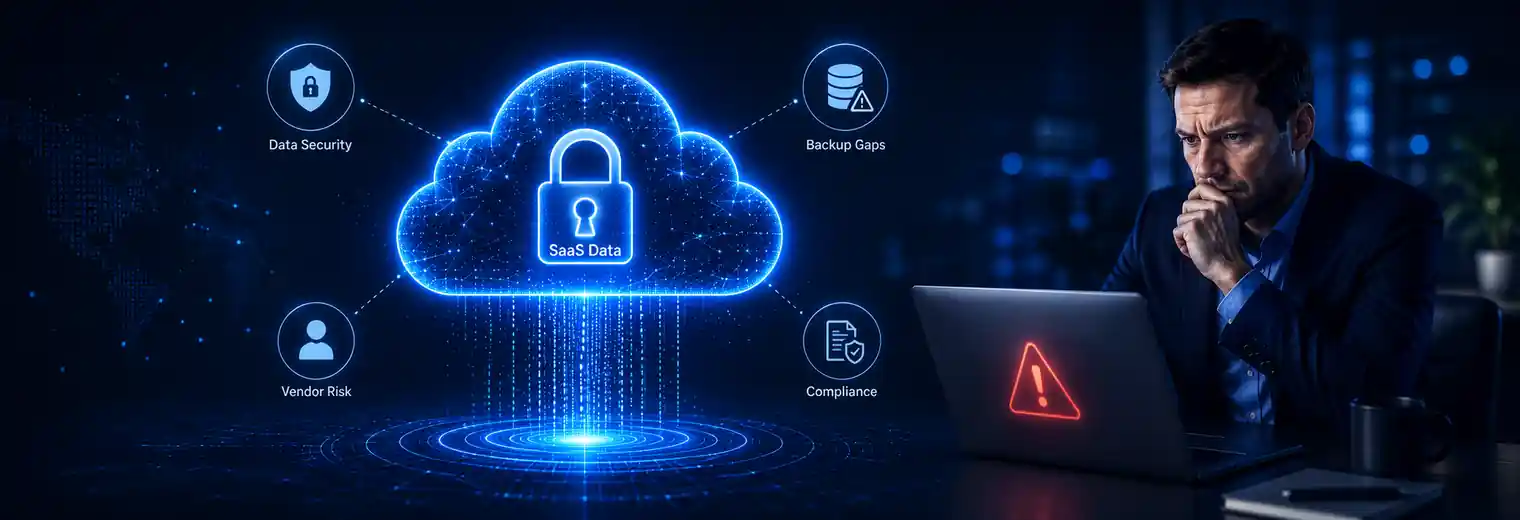
Modern businesses rely heavily on backup and disaster recovery to safeguard critical data stored across SaaS platforms like Salesforce, Microsoft 365, Google Workspace, or Slack. However, a dangerous misconception persists- many assume SaaS providers automatically protect all their data. The truth? These services primarily focus on platform uptime and not necessarily on preserving your organization’s information in the event of accidental deletion, insider misuse, or ransomware.

While vendors often include some level of redundancy, those built-in safeguards fall short when real-world disasters strike. Without dedicated backup and disaster recovery solutions, organizations risk significant financial, operational, and reputational damage due to unforeseen data loss. Let’s explore why SaaS data isn’t as secure as many believe and what steps you can take to protect it more effectively.


What Makes SaaS Data Vulnerable Despite Enterprise Cloud Backup?

Even with advanced enterprise cloud backup systems in place, SaaS data faces unique vulnerabilities. The shared responsibility model - central to cloud computing - often confuses users. SaaS providers secure their infrastructure, but customers remain responsible for their content and user-level data.

For instance, accidental human actions cause nearly one-third of SaaS data loss incidents each year. Whether an employee deletes files or overwrites them, recovery can be extremely difficult without an independent copy stored outside the SaaS platform. Vendor retention policies are equally tricky: Google Workspace automatically deletes trashed files after 30 days, and Microsoft’s default recycle bins only retain deleted items for a limited period.

Moreover, cloud storage vulnerabilities often arise due to configuration errors, limited audit logging, and insufficient access controls. Attackers exploit these weaknesses through phishing attempts, session hijacking, and malware infiltration.

A reliable SaaS defence requires more than just a vendor-managed storage plan; it calls for a structured and customized data protection architecture that prioritizes backup and disaster recovery across every layer of your digital ecosystem.

Why Disaster Recovery Strategies for SaaS Are Often Overlooked

SaaS adoption grew explosively because it simplified IT management - no servers to maintain, automatic updates, and elastic scalability. But this convenience leads many decision-makers to overlook comprehensive disaster recovery strategies.

Disaster recovery planning traditionally focused on on-premise setups, but SaaS services shifted that mindset. Companies now assume that since data lives “in the cloud,” it’s safe by default. This assumption leaves dangerous gaps.

Most SaaS vendors include minimal recovery support meant to restore platform functionality, not specific company data. So, if data corruption, file overwrites, or targeted attacks occur, organizations can lose access to business-critical information permanently.

Notably, service-level agreements (SLAs) from these vendors protect uptime, not your actual records. That’s where organizations need independent and verifiable cloud backup solutions that maintain control and ownership over their data, even if the SaaS vendor suffers a service disruption.

How Ransomware Attacks Expose SaaS Weaknesses

  • 1
    Rising Ransomware Threats
    The growing surge in ransomware attacks highlights how unprepared many SaaS environments can be. Cybercriminals increasingly target platforms like Microsoft 365 and Dropbox because they host vast amounts of valuable business data.
  • 2

    Why SaaS Applications Are Vulnerable
    SaaS applications are particularly vulnerable due to automatic data synchronization between local devices and the cloud. If a ransomware payload infects a user’s computer, it can quickly encrypt all synced data and spread across connected accounts.
  • 3
    Limitations of Vendor Restore Options
    In such incidents, many companies realize too late that their vendor’s “restore options” are limited—often only allowing recovery of recent versions, if at all. Without a dedicated SaaS backup and recovery system, retrieving clean versions of affected files becomes nearly impossible.
  • 4
    Importance of Isolated Backups
    Experts recommend isolating backups from live environments as a critical part of modern backup and disaster recovery planning. This ensures that even if malware infiltrates the SaaS application, secure backup copies remain protected and available for quick restoration.

What Role Does Cyber Threat Intelligence Play in SaaS Protection?

Today’s evolving security landscape makes cyber threat intelligence vital for SaaS defence. This intelligence combines real-time monitoring, analytical tools, and behavioural assessments to predict and counter malicious activity before it causes harm.
Threat intelligence allows organizations to detect compromised accounts or unsecured integrations early, ensuring they can activate data loss protection protocols swiftly. It also helps pinpoint vulnerabilities in third-party APIs and plugins that commonly connect to SaaS environments.
For example, an HR platform linked to your CRM might share data insecurely, creating an entry point for attackers. Integrating cybersecurity insights into your cloud security solutions architecture significantly reduces such cross-application risks and reinforces data resilience.

Can Cloud Backup Restore Really Recover Everything?

Many organizations don’t realize how critical cloud backup restore procedures are until disaster strikes. Recovery speed and completeness depend heavily on how backups are structured and stored.
A well-architected backup system should enable point-in-time recovery letting you roll back to an exact version before the incident occurred. But most SaaS vendors provide only limited snapshots of recent data, not comprehensive version histories.
That’s why independent managed backup and disaster recovery providers build automated replication and encryption capabilities into their solutions. These systems ensure you maintain data sovereignty, meaning even if your SaaS provider experiences an outage or breach - your information remains accessible, compliant, and restorable in full.

What Google Cloud Security Teaches About Shared Responsibility

Understanding Shared Responsibility

When reviewing case studies like Google Cloud Security, it becomes clear how major providers operate under a shared responsibility model. Google secures the physical infrastructure and underlying systems, while customers are responsible for managing user access, data, and backup policies.

Common Security Gaps

Misconfigurations such as errors in identity federation or weak password policies can create significant security vulnerabilities. These gaps are often exploited by attackers if not properly managed.

Strengthening Security Measures

To mitigate risks, businesses should implement redundant backups across multiple regions and layers. Leveraging automated cloud security tools helps ensure compliance, monitor user behavior, and trigger recovery processes when anomalies are detected.

Why Businesses Need Cloud Security Services Beyond Vendor Protection

Implementing dedicated cloud security services goes beyond what SaaS vendors offer. These services protect organizations through thorough audits, continuous monitoring, and compliance validation against global standards like ISO 27001 and SOC 2.

For example, a managed security provider can supplement SaaS platforms with proactive security controls, multi-factor authentication, and automated incident response tools. Combined with cloud backup solutions, these services create defense-in-depth ensuring your cloud data remains intact, private, and recoverable.
An effective backup and disaster recovery model integrates this multi-layered approach, linking storage, replication, monitoring, and restoration.

Why SaaS Backup and Recovery Is Non Negotiable

In a world where uptime and continuous access drive productivity, SaaS backup and recovery are no longer optional luxuries. They’re essential compliance and continuity safeguards.
Beyond basic peace of mind, regular backups directly support business continuity regulations, such as GDPR, HIPAA, or India’s Personal Data Protection Act, all which mandate proof of recoverability in case of data loss incidents.
Using intelligent backup automation not only strengthens your cloud security services but also reduces downtime costs. A modern enterprise cannot afford to rely solely on its SaaS vendor when the responsibility for data integrity still largely rests with the user.

Why Managed Backup and Disaster Recovery Is a Smart Investment

Businesses increasingly turn to specialized managed backup and disaster recovery services to streamline and secure their cloud operations. Managed solutions handle automated scheduling, cross-platform integration, and compliance reporting, helping organizations avoid costly errors while meeting audit requirements.
This approach ensures recovery objectives (RTOs and RPOs) align with business criticality. As threats evolve - from ransomware and insider sabotage to natural disasters - managed partners ensure systems remain resilient across all conditions.
Investing in managed recovery is not just about preventing disasters but enabling rapid operations continuity to maintain trust and revenue flow even in crisis scenarios.

How Cloud Security Tools Strengthen Data Loss Protection

Technology evolves fast, and sophisticated cloud security tools now allow real-time detection of anomaly patterns or suspicious access attempts. Paired with data loss protection policies, these tools automatically isolate compromised user accounts or trigger backup restoration workflows before damage spreads.
For instance, AI-driven risk scoring can prioritize threats by analysing user behaviour and connection context, providing actionable alerts to security admins. When integrated with cloud security solutions, such tools create an intelligent, self-healing ecosystem that keeps SaaS data safer and more compliant.

What Does the Future Hold for Cloud Security Solutions?

The future of cloud security solutions lies in automation and orchestration across multiple SaaS environments. Artificial intelligence and policy-based encryption will allow businesses to implement dynamic, adaptive backup ecosystems that automatically respond to emerging cyber threats.

Enterprises will shift from reactive protection to predictive governance, combining backup strategies with responsive intelligence and cross-tenant analytics. Greater synergy between cyber threat intelligence and real-time recovery systems will ensure that not only is data backed up but contextually secured and verified for integrity before each restore.
Ultimately, businesses that invest early in unified backup and disaster recovery frameworks will stay ahead of security risks, compliance mandates, and growing digital complexity.

Final Thoughts

Your SaaS data may feel safe in the cloud, but appearances deceive. As countless incidents demonstrate, accidental deletions, malicious insiders, and sophisticated ransomware attacks can cripple operations overnight. Depending solely on your SaaS provider’s limited safety nets leaves your organization dangerously exposed.
Building a resilient architecture starts with independent backup and disaster recovery solutions combined with strong cloud security tools, intelligence-driven monitoring, and managed expertise. When every file, email, and record drive business success, protection isn’t just an IT responsibility , it’s a strategic imperative.

Loading...