📢
Flat 40% OFFfor the first 100 customers!Fill out the form below & get your discount code via email.Hurry, don't miss the chance!
contact with Vast Edge

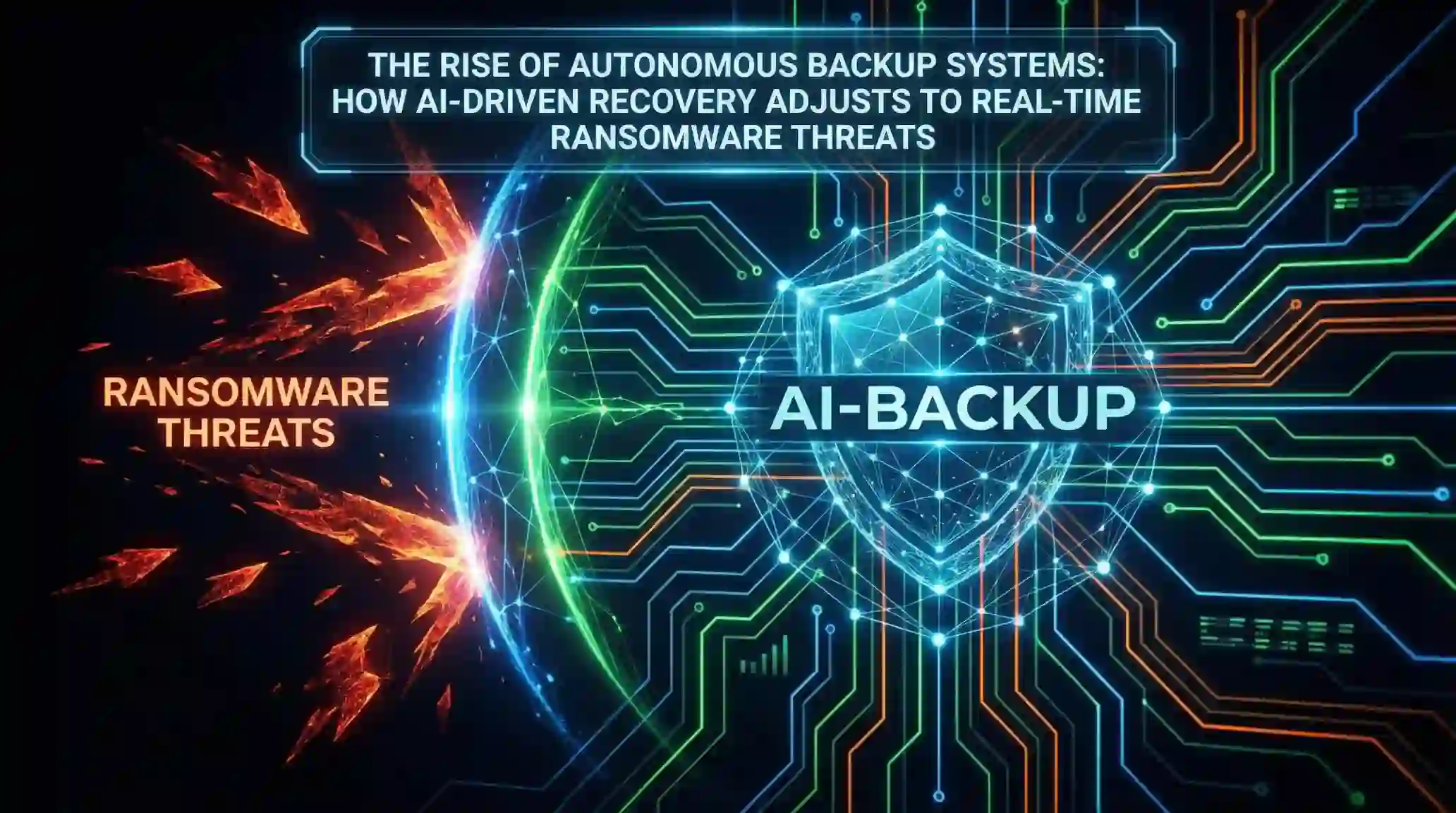
The Rise of Autonomous Backup Systems: How AI-Driven Recovery Adjusts to Real-Time Ransomware Threats

Trusted by Global Brands

HHI
Art
Act
Natura
quorum
ForeScout
Cokeva
BioMarin
christie
Upwork
Mother
Walmart

Backup and disaster recovery is no longer a background IT function. It has become a frontline defense strategy. As ransomware attacks grow more advanced and automated, businesses can no longer depend on traditional backup data methods that were designed for slower, predictable threats.
Organizations today operate across cloud storage platforms, SaaS applications, hybrid infrastructure, and mixed legacy and modern systems. In this environment, manual recovery processes and static disaster recovery strategies are not enough.
image

What enterprises need now are intelligent, autonomous backup and disaster recovery solutions that can detect anomalies, isolate threats and trigger cloud backup restore processes in real time.
This shift is driving the rise of AI-powered enterprise cloud backup systems that adapt automatically to evolving risks. In this article, we explore why autonomous backup systems are becoming essential, how they work and choosing the right cloud disaster recovery solution for your organization.

Why Traditional Backup Data Strategies Can’t Keep Up with AI Threats

Traditional backup data approaches were designed for hardware failures, accidental deletions and natural disasters. They were not built for modern ransomware attacks that use artificial intelligence to scan networks, encrypt cloud storage repositories and spread across environments within minutes.

Here are the core limitations of older disaster recovery strategies:

Static scheduling

Most conventional backup and disaster recovery solutions operate on fixed intervals. If ransomware encrypts files between backups, critical backup data may already be compromised.

Lack of behavioral analysis

Legacy systems do not analyze usage patterns or detect suspicious encryption behavior. They simply copy data from one location to another.

Limited SaaS backup and recovery coverage

Many organizations assume that SaaS vendors fully protect their data. In reality, SaaS providers ensure infrastructure availability, not granular backup data protection or fast cloud backup restore.

As ransomware attacks become automated and intelligent, traditional enterprise cloud backup solutions must evolve. Static defense cannot defeat adaptive threats.

How AI-Powered Enterprise Cloud Backup Protects Against Next-Gen Ransomware Attacks

AI-powered enterprise cloud backup systems are built to detect, respond, and recover automatically. They go beyond simple storage replication and act as intelligent guardians of backup data.

Here is how they strengthen backup and disaster recovery capabilities:

  • 1
    Real-Time Threat Detection
    AI engines monitor file behavior, access patterns, and unusual data changes across cloud storage and SaaS environments. When abnormal encryption activity is detected, the system isolates affected workloads immediately.
    This prevents ransomware attacks from spreading to backup repositories.
  • 2
    Automated Cloud Backup Restore
    In autonomous environments, cloud backup restore is triggered based on predefined policies and AI assessments. Recovery points are validated automatically to ensure clean, uninfected data is restored.
    This reduces recovery time objectives and ensures business continuity without waiting for manual intervention.
  • 3
    Immutable Backup Data
    Modern backup and disaster recovery solutions include immutable storage. Once backup data is written, it cannot be altered or deleted. Even if ransomware gains administrative access, recovery points remain intact.
  • 4
    SaaS Backup and Recovery Integration
    AI-driven systems protect applications such as accounting platforms, collaboration tools and CRM systems. SaaS backup and recovery ensures business-critical data remains protected even if the provider experiences issues or user-level data loss occurs.
  • 5
    Protection for Accounting Software Backup Solutions
    Finance systems are prime ransomware targets. AI-enabled accounting software backup solutions monitor transaction logs and financial records in real time. Suspicious modifications trigger alerts and automated recovery workflows.
    By combining intelligence with automation, enterprise cloud backup platforms transform backup and disaster recovery from reactive to proactive.

Choosing the Right Backup and Disaster Recovery Solution for Adaptive Threat Response

Selecting the right backup and disaster recovery solution requires more than checking feature lists. Enterprises must evaluate how well the platform adapts to real-time threats and supports long-term resilience.
When evaluating backup and disaster recovery solutions, consider the following:

Does the Platform Offer Autonomous Detection?

The solution should include behavioral analytics that identify ransomware attacks before encryption spreads. Look for machine learning capabilities that continuously analyze backup data integrity.

Is Enterprise Cloud Backup Fully Integrated?

A modern enterprise cloud backup solution should protect:
  • 1
    Virtual machines
  • 2
    Cloud-native workloads
  • 3
    SaaS applications
  • 4
    Databases
  • 5
    Accounting software systems

Fragmented tools increase complexity and risk.

Can It Handle Mixed Legacy and Modern Systems?

Many enterprises operate hybrid infrastructures. The best backup platforms for mixed legacy and modern systems provide centralized management across physical servers, on-premise workloads, and cloud storage.

Does It Support Instant Cloud Backup Restore?

Speed matters. During ransomware attacks, every minute of downtime affects revenue and reputation. Your backup and disaster recovery solution should enable near-instant cloud backup restore with verified recovery points.

What Are the Built-In Disaster Recovery Strategies?

Look for solutions that include predefined disaster recovery strategies such as automated failover, cross-region replication, and air-gapped backups.
An adaptive backup and disaster recovery framework should protect against both internal errors and external ransomware attacks.

Cloud Storage vs. On-Prem Backup for Autonomous Recovery Systems

One of the most debated topics in backup and disaster recovery planning is whether to rely on cloud storage or on-premise backup systems.

Cloud Storage for Enterprise Cloud Backup

Cloud storage offers scalability, geographic redundancy, and rapid deployment. It supports:
  • 1
    Enterprise cloud backup automation
  • 2
    SaaS backup and recovery integration
  • 3
    Cross-region disaster recovery strategies
  • 4
    Lower infrastructure maintenance

Cloud environments also allow AI-driven systems to analyze large volumes of backup data efficiently.

On-Prem Backup Considerations

On-premise systems provide direct control and may support regulatory requirements in certain industries. However, they require hardware management, physical security, and manual scaling.
In the context of ransomware attacks, on-premise backup repositories can become targets if not properly isolated.

Hybrid Approach for Maximum Resilience

Many enterprises adopt a hybrid strategy combining cloud storage with on-premise backup. This approach ensures:
  • 1
    Faster local recovery
  • 2
    Offsite protection for disaster recovery
  • 3
    Redundant backup data copies

For autonomous recovery systems, cloud storage often provides the flexibility required for AI-powered monitoring and global disaster recovery strategies.

Cost and ROI: AI-Driven Disaster Recovery vs Manual Incident Response

Cost is often cited as a barrier to adopting advanced backup and disaster recovery solutions. However, the true comparison should focus on return on investment rather than upfront expense.

The Hidden Cost of Manual Recovery

Manual incident response involves:
  • 1
    Extended downtime
  • 2
    IT overtime costs
  • 3
    Revenue loss
  • 4
    Regulatory penalties
  • 5
    Reputational damage

In ransomware attacks, delayed recovery can multiply financial impact.

Financial Benefits of Autonomous Backup and Disaster Recovery

AI-driven enterprise cloud backup reduces:
  • 1
    Recovery time objectives
  • 2
    Human error
  • 3
    Data corruption risk
  • 4
    Compliance violations

Automated cloud backup restore ensures business operations resume quickly.

Calculating ROI for Backup and Disaster Recovery Solutions

To measure ROI, consider:
  • 1
    Average hourly downtime cost
  • 2
    Data value per department
  • 3
    Compliance risk exposure
  • 4
    Frequency of attempted ransomware attacks

When organizations compare AI-driven disaster recovery strategies to manual processes, the long-term financial advantage becomes clear.

Best Backup Platforms for Mixed Legacy and Modern Systems in 2026

As infrastructure grows more complex, organizations must invest in the best backup platforms for mixed legacy and modern systems.

Key features to prioritize include:

  • 1
    Unified management dashboards
  • 2
    Cross-environment backup data visibility
  • 3
    Integrated SaaS backup and recovery
  • 4
    Automated cloud backup restore testing
  • 5
    Secure cloud storage replication

Platforms that unify enterprise cloud backup and traditional systems reduce operational silos and strengthen overall backup and disaster recovery readiness.

Building a Future-Ready Backup and Disaster Recovery Strategy

The future of backup and disaster recovery is autonomous, intelligent, and adaptive. Organizations must rethink how they protect backup data across cloud storage, SaaS platforms, and legacy infrastructure.

A modern strategy should include:

  • 1
    AI-powered enterprise cloud backup
  • 2
    Immutable backup data repositories
  • 3
    Automated cloud backup restore workflows
  • 4
    Comprehensive disaster recovery strategies
  • 5
    Protection against ransomware attacks
  • 6
    Integrated accounting software backup solutions

Backup and disaster recovery is no longer just about restoring files. It is about ensuring operational continuity in a world where threats evolve daily. While intelligent systems improve detection and response, organizations still need to follow proven best practices for implementing cloud disaster recovery to ensure proper configuration, testing, and long-term resilience.

Final Thoughts

Ransomware attacks are becoming smarter, faster, and more destructive. Traditional backup data approaches are struggling to keep pace. Autonomous backup and disaster recovery solutions powered by artificial intelligence are redefining resilience for enterprises.
By investing in enterprise cloud backup, integrating SaaS backup and recovery, and implementing intelligent disaster recovery strategies, organizations can protect their cloud storage environments and critical accounting systems from modern threats.
The rise of autonomous systems marks a turning point. Backup and disaster recovery is no longer reactive. It is predictive, adaptive, and essential for long-term business survival.
If your current strategy still relies on manual monitoring and periodic backups, now is the time to evaluate advanced backup and disaster recovery solutions designed for real-time threat response.

Your Vision, Our Expertise

Elevating Your Software Product Engineering Journey with Vast Edge

ABOUT VAST EDGE

For more than two decades, Vast Edge has served Fortune 500 enterprises across finance, manufacturing, telecom, and healthcare. Our expertise in AI driven migration, analytics, and security enables these organizations to scale with confidence while meeting the highest compliance standards.
We partner closely with CIOs, architects, and transformation teams to design hybrid environments that unify legacy systems with cloud-native AI services.

QUICK LINKS

TECHNOLOGY PARTNERS

CONTACT US

Copyrights © February 14 , 2026 All Rights Reserved by Vast Edge Inc.