AT&T NetBond Cloud Interconnect Services

Connect your AT&T network to AWS, Microsoft Azure, Google Cloud, or Oracle Cloud. Vast Edge provides architecture, deployment, migration, testing, and managed support for AT&T NetBond cloud connectivity.

Trusted by Global Enterprises
HHI
Walmart
HHI
Art
Act Enviro
Natura
Quorum
ForeScout
Cokeva
BioMarin
Christie
Upwork
Mother Labs
Walmart
HHI
Walmart
HHI
Art
Act Enviro
Natura
Quorum
ForeScout
Cokeva
BioMarin
Christie
Upwork
Mother Labs
Walmart
0+Years Experience
0+Unique Customers
0+Solutions Delivered
ISO 27001Certified
SOC 2Type II Compliant

What Is AT&T NetBond?

AT&T NetBond is a cloud networking service that connects enterprise networks with supported cloud providers and data centers. It is designed for organizations that need more controlled connectivity for hybrid and multi-cloud environments.

The service can extend an AT&T Multiprotocol Label Switching Virtual Private Network, or MPLS VPN, to supported cloud platforms. This enables cloud resources to operate as connected endpoints within the organization’s wider network architecture.

AT&T NetBond can support connections to services such as:
  • 01
    AWS Direct Connect
  • 02
    Microsoft Azure ExpressRoute
  • 03
    Google Cloud Partner Interconnect
  • 04
    Oracle Cloud Infrastructure FastConnect
  • 05
    Other supported cloud and data-center environments

The availability of specific providers, connection locations, bandwidth options, and management models should be confirmed with AT&T during planning.

Flexible AT&T NetBond Connectivity Plans

$100.00 / Month

BRONZE

+ 4% of cloud spend /month P3 & P4- Support Tickets 8 Business Hours- Response Time

$1,000.00 / Month

SILVER

+ 4% of cloud spend /month P2, P3 & P4- Support Tickets 4 Business Hours- Response Time

$5,000.00 / Month

GOLD

+ 4% of cloud spend /month P1, P2, P3 & P4- Support Tickets 2 Business Hours- Response Time 24x7 Support

How AT&T NetBond Cloud Interconnect Works

AT&T NetBond uses Software-Defined Networking, or SDN, to help organizations establish and manage connections between their enterprise network and supported cloud providers.

Instead of sending all cloud traffic over standard public-internet routes, organizations can use their AT&T network service to reach connected cloud environments. This can provide greater control over routing, connection capacity, and cloud access.

A typical architecture includes:
  1. An eligible AT&T enterprise network service
  2. One or more cloud-provider accounts
  3. A supported cloud interconnect location
  4. Cloud-native connectivity services
  5. Routing and IP address configuration
  6. Security and access controls
  7. Redundant connections for critical workloads
  8. Monitoring and incident-response procedures

The final architecture depends on the organization’s locations, applications, bandwidth, cloud providers, and business-continuity requirements.

How Vast Edge Helps with AT&T NetBond

Vast Edge helps enterprises plan, deploy, test, and optimize AT&T NetBond cloud connections. Our role is to coordinate the network and cloud components required to support the customer’s applications and workloads.

We begin by reviewing the existing network, cloud architecture, application dependencies, traffic patterns, and recovery objectives. This assessment helps identify the required connections, locations, capacity, routing, and redundancy.

Vast Edge services can include:
  • 01
    Current network and cloud-connectivity assessment
  • 02
    AT&T NetBond architecture planning
  • 03
    Cloud-provider connection design
  • 04
    Bandwidth and capacity planning
  • 05
    Routing and IP address design
  • 06
    Network segmentation planning
  • 07
    Redundancy and failover design
  • 08
    Cloud-migration connectivity planning
  • 09
    Connection provisioning support
  • 10
    Performance and failover testing
  • 11
    Technical documentation
  • 12
    Monitoring and ongoing optimization

Vast Edge coordinates with the customer, AT&T, cloud providers, and other authorized partners as required. Final service availability and provisioning remain subject to the applicable provider requirements.

Connect AT&T to Leading Cloud Platforms

AT&T NetBond can connect an eligible AT&T enterprise network with supported cloud environments. Each connection uses the cloud provider’s native interconnect service.

The following table provides a summary:

Cloud platformNative connectivity productCommon business scenarioVast Edge support
Amazon Web ServicesAWS Direct ConnectHybrid applications, cloud migration, and large data transfersArchitecture, routing, provisioning support, and testing
Microsoft AzureAzure ExpressRoutePrivate Azure connectivity and hybrid Microsoft environmentsCircuit planning, peering, gateway integration, and validation
Google CloudPartner InterconnectHybrid workloads and private access to Google Cloud resourcesVLAN attachments, routing coordination, and testing
Oracle Cloud InfrastructureOCI FastConnectOracle application, database, ERP, and Primavera workloadsFastConnect design, migration planning, and validation


Every deployment should be reviewed against current AT&T and cloud-provider requirements before implementation.

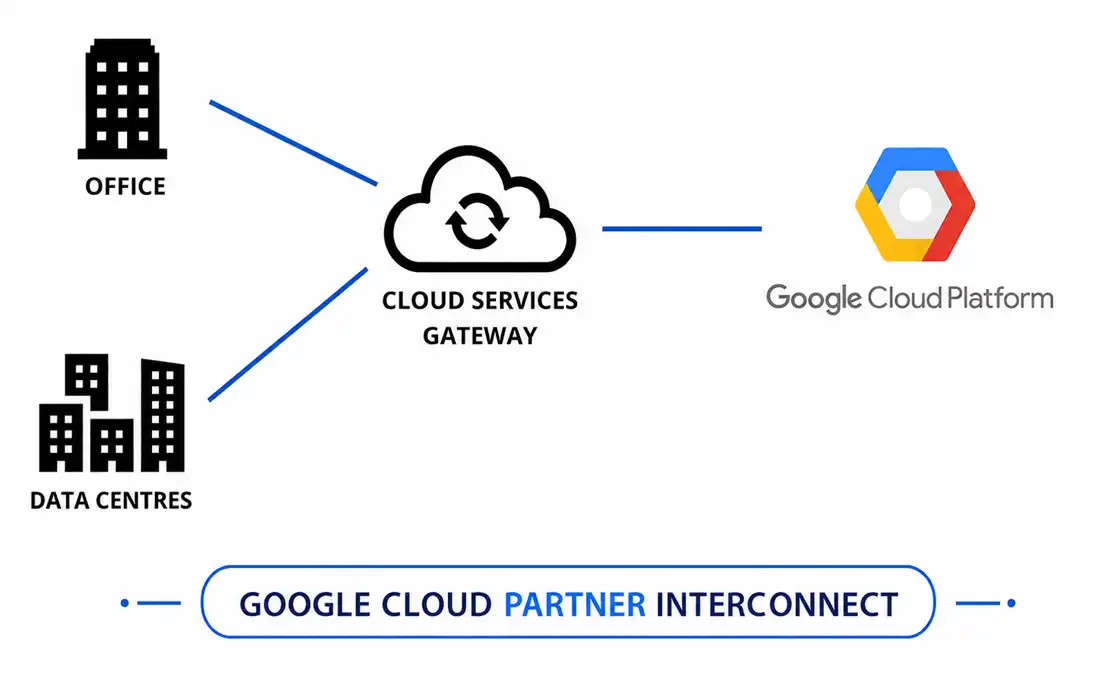
AT&T NetBond to Google Cloud Partner Interconnect

AT&T NetBond can connect an enterprise network to Google Cloud through Partner Interconnect. This architecture suits organizations moving applications to Google Cloud or operating hybrid environments.

Vast Edge assesses bandwidth and availability requirements and identifies suitable connection locations. Our team supports VLAN attachments, routing, IP addressing, connection validation, and integration with the existing enterprise network.

image
  • 01
    Typical use cases
    ◾ Migrating applications to Google Cloud
    ◾ Connecting data centers with Google Cloud workloads
    ◾ Supporting hybrid application architectures
    ◾ Accessing analytics and data-processing environments
    ◾ Improving connectivity for performance-sensitive workloads
  • 02
    General prerequisites
    ◾ An eligible AT&T network service
    ◾ An active Google Cloud account
    ◾ A supported Partner Interconnect location
    ◾ A suitable Google Cloud network configuration
    ◾ Required cloud and network administration permissions
    ◾ Approved routing and IP address information

For critical workloads, Vast Edge can design redundant connections across separate Google Cloud edge availability domains. Testing should cover route advertisement, application access, latency, throughput, failover behavior, and recovery procedures.

AT&T NetBond to Oracle Cloud FastConnect

AT&T NetBond can be integrated with Oracle Cloud Infrastructure through OCI FastConnect. This provides private connectivity between enterprise networks and supported Oracle Cloud resources.

This architecture can support organizations migrating Oracle databases, ERP applications, Primavera environments, or other critical workloads to OCI.

Vast Edge helps define the required FastConnect architecture, bandwidth, routing, virtual cloud network connectivity, and IP addressing. Our team coordinates the AT&T and OCI components and validates that the connection supports the intended applications.
  • 01
    Typical use cases
    ◾ Migrating Oracle databases to OCI
    ◾ Connecting on-premises ERP applications with Oracle Cloud
    ◾ Supporting hosted Primavera environments
    ◾ Operating hybrid Oracle application environments
    ◾ Connecting data centers with OCI virtual cloud networks
  • 02
    General prerequisites
    ◾ An eligible AT&T network service
    ◾ An active OCI tenancy
    ◾ A configured OCI virtual cloud network
    ◾ A supported FastConnect location
    ◾ Required network and OCI permissions
    ◾ Approved routing and security configurations

Redundant virtual circuits and connections can be designed across separate locations where business-continuity requirements justify them. Testing should cover routing, application access, throughput, failover, and restoration to the primary connection.

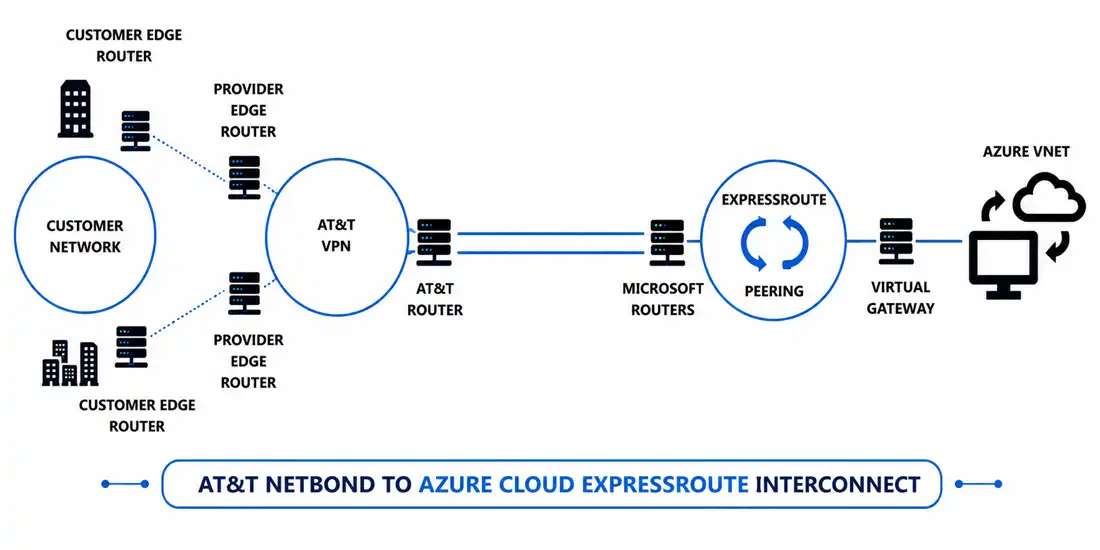
AT&T NetBond to Microsoft Azure ExpressRoute

AT&T NetBond can connect an enterprise network to Microsoft Azure through Azure ExpressRoute. This supports private connectivity to Azure virtual networks and related cloud resources.

The architecture is suitable for organizations running hybrid applications, moving workloads to Azure, or connecting business locations with Azure-hosted systems.

Vast Edge evaluates application traffic, bandwidth, routing, security, and availability requirements. Our team supports ExpressRoute circuit planning, virtual network gateway integration, peering configuration, route validation, and provider coordination.

image
  • 01
    Typical use cases
    ◾ Migrating enterprise applications to Azure
    ◾ Connecting data centers with Azure virtual networks
    ◾ Supporting hybrid Microsoft environments
    ◾ Connecting distributed business locations with Azure workloads
    ◾ Improving connectivity for critical Azure-hosted applications
  • 02
    General prerequisites
    ◾ An eligible AT&T network service
    ◾ An active Microsoft Azure subscription
    ◾ An ExpressRoute circuit
    ◾ A suitable Azure virtual network
    ◾ Appropriate gateway and peering configurations
    ◾ Required Azure and network permissions

Redundancy can include paired ExpressRoute connections and separate recovery paths. Before production use, Vast Edge tests route exchange, reachability, application connectivity, throughput, latency, failover, and reconnection behavior.

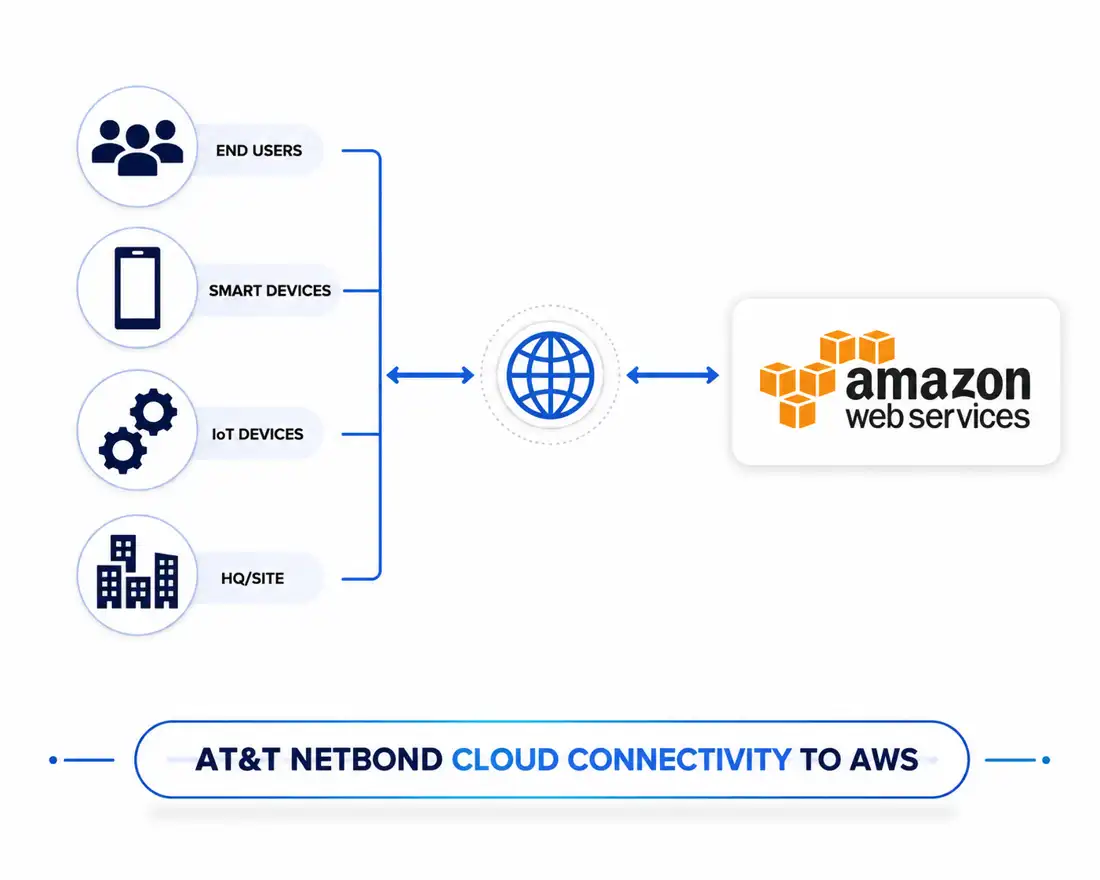
AT&T NetBond to AWS Direct Connect

AT&T NetBond can connect an enterprise network to Amazon Web Services through AWS Direct Connect. This can support organizations operating hybrid applications, moving workloads to AWS, or transferring large volumes of data.

Vast Edge reviews the target workloads, traffic patterns, bandwidth requirements, AWS architecture, and recovery objectives. Our team supports connection planning, virtual interface configuration, Border Gateway Protocol routing, and IP address design.

We also help coordinate connectivity with AWS Virtual Private Clouds, or VPCs, and other approved AWS network resources.

image
  • 01
    Typical use cases
    ◾ Migrating applications and workloads to AWS
    ◾ Connecting enterprise data centers with AWS
    ◾ Supporting hybrid applications
    ◾ Transferring large data volumes
    ◾ Connecting backup or disaster-recovery environments
    ◾ Improving connectivity for AWS-hosted enterprise applications
  • 02
    General prerequisites
    ◾ An eligible AT&T network service
    ◾ An active AWS account
    ◾ A suitable Direct Connect location or partner connection
    ◾ A configured AWS network environment
    ◾ Approved routing and IP address information
    ◾ Required AWS and network administration permissions

Resilient designs may use connections in separate locations and an approved secondary network path. Testing should verify routes, AWS resource access, latency, throughput, connection failover, and recovery to the preferred route.

How to Plan an AT&T NetBond Architecture

A successful NetBond implementation begins with the applications and business processes that the connection must support. Network capacity should not be selected solely from current traffic averages.

Planning should account for:
  • 01
    Current and expected application traffic
  • 02
    Cloud-migration timelines
  • 03
    Data-transfer requirements
  • 04
    Workload locations
  • 05
    Cloud-provider regions
  • 06
    Application dependencies
  • 07
    Security and segmentation requirements
  • 08
    Acceptable downtime
  • 09
    Recovery and failover requirements
  • 10
    Future capacity growth
  • 11
    Monitoring and operational ownership

The architecture should also identify what happens when a connection, location, or cloud service becomes unavailable. Critical workloads may require multiple connections, locations, or approved backup paths.

AT&T NetBond Deployment Process

  1. Environment assessment
    Vast Edge reviews the existing AT&T network, cloud accounts, application dependencies, traffic patterns, and security requirements.
    The assessment identifies technical constraints and confirms whether the proposed cloud platforms and locations are suitable.
  2. Architecture design
    The architecture defines connection locations, cloud-native interconnect services, bandwidth, routing, IP addressing, segmentation, and redundancy.
    The design should also document application priorities, expected traffic, recovery requirements, and operational ownership.
  3. Provider coordination
    Vast Edge helps coordinate the tasks required across the customer, AT&T, and the selected cloud providers.
    This includes confirming prerequisites, gathering connection information, and documenting the responsibilities of each party.
  4. Configuration
    The required cloud-side and customer-controlled network components are configured. These may include virtual circuits, virtual interfaces, VLAN attachments, peering, gateways, routing, and security controls.
    Configuration responsibility depends on the customer’s access model and provider agreements.
  5. Testing and validation
    Testing confirms that the connection works as intended before production workloads are moved.

    01Route advertisement and acceptance
    02Application and resource accessibility
    03Network latency
    04Available throughput
    05Security policy enforcement
    06Redundant connection behavior
    07Failover and restoration
    08Monitoring and alerting
    09Documentation accuracy

  6. Migration and optimization
    Approved workloads are moved according to the migration plan. Performance and availability are monitored during and after the transition.
    Capacity, routing, or redundancy can then be adjusted based on actual usage and operational requirements.

Common AT&T NetBond Use Cases

AT&T NetBond can support several enterprise cloud and network scenarios.

Cloud migration

Organizations can prepare network connectivity before moving applications and data to AWS, Azure, Google Cloud, or Oracle Cloud.
This reduces the risk of discovering routing, bandwidth, or application-access problems during the migration.

Hybrid cloud connectivity

Businesses can connect on-premises systems with cloud-based applications and data services.
This is useful when an application depends on systems that remain in a corporate data center.

Multi-cloud connectivity

Organizations using multiple cloud providers need consistent routing, security, monitoring, and operational controls.
NetBond architecture can form part of a wider strategy for connecting approved cloud environments with the enterprise network.

Business-critical applications

Finance, ERP, analytics, inventory, and customer systems may need predictable connectivity and documented recovery procedures.
The network design should reflect the operational impact of an application becoming unavailable.

Backup and disaster recovery

NetBond connectivity can support data movement between enterprise systems and approved backup or recovery environments.
The architecture should account for backup volumes, recovery traffic, recovery time objectives, and secondary connection availability.

Data-intensive workloads

Analytics platforms, databases, and migration projects may transfer large amounts of data.
Capacity planning should account for peak usage and avoid relying only on normal daily traffic levels.

Redundancy and Failover Planning

A cloud interconnect should not be treated as resilient simply because the primary connection is operational. The architecture must account for connection, device, location, and provider failures.

Depending on business requirements, redundancy may include:
  • 01
    Multiple virtual connections
  • 02
    Separate physical connections
  • 03
    Diverse provider locations
  • 04
    Redundant routers or gateways
  • 05
    Separate cloud regions
  • 06
    Approved secondary network paths
  • 07
    Documented failover procedures
  • 08
    Monitoring and incident alerts

Redundant components must be tested regularly. An untested backup path may not provide the expected protection during an actual incident.

Security Considerations for Cloud Interconnect

Private connectivity can reduce reliance on public-internet routes, but it does not replace security controls. Organizations still need to manage identities, permissions, network segmentation, encryption, logging, and monitoring.

A cloud interconnect security review should cover:
  1. Network access rules
  2. Route controls
  3. Cloud account permissions
  4. Administrative access
  5. Data encryption requirements
  6. Network segmentation
  7. Logging and monitoring
  8. Configuration-change controls
  9. Incident-response responsibilities
  10. Compliance requirements

Security controls should be reviewed whenever new applications, networks, accounts, or cloud regions are added.

What Our AT&T NetBond Services Include

Vast Edge can support the complete NetBond implementation lifecycle, from initial assessment through operational optimization.

Services may include:

01Network and cloud-readiness assessment
02Cloud-provider compatibility review
03NetBond architecture design
04Capacity and bandwidth planning
05AWS Direct Connect integration
06Azure ExpressRoute integration
07Google Cloud Partner Interconnect integration
08OCI FastConnect integration
09Routing and IP address planning
10Network segmentation
11Redundancy and failover design
12Migration connectivity planning
13Connection testing
14Performance validation
15Technical documentation
16Monitoring and optimization
17Troubleshooting existing connections


The final scope depends on the customer’s AT&T agreement, cloud environments, internal responsibilities, and operational requirements.

Why Work with Vast Edge?

Vast Edge has supported enterprise cloud, application, data, and infrastructure projects since 2004. Our experience extends beyond establishing a network connection.

We help organizations align connectivity with cloud migration, application performance, security, backup, and recovery requirements.

Customers can work with Vast Edge for:
  1. Multi-cloud architecture experience
  2. AWS, Azure, Google Cloud, and Oracle Cloud knowledge
  3. Cloud-migration planning
  4. Enterprise application experience
  5. Backup and disaster-recovery planning
  6. Security and network architecture support
  7. Testing and operational documentation
  8. Ongoing cloud and connectivity optimization

Our approach begins with the applications and business processes that the connection must support. This helps avoid designing a network that works technically but does not meet operational requirements.

Prepare for an AT&T NetBond Assessment

Organizations can prepare the following information before an architecture assessment:

01Existing AT&T network services
02Business and data-center locations
03Current cloud providers
04Cloud account and network details
05Target cloud regions
06Application inventory
07Application dependencies
08Current and expected bandwidth
09IP address ranges
10Routing requirements
11Security requirements
12Availability objectives
13Recovery requirements
14Target migration schedule

Providing this information early can help identify dependencies and reduce delays during architecture planning.

Talk to a Cloud Network Expert

Planning an AT&T NetBond deployment requires coordination across enterprise networks, cloud platforms, applications, security controls, and service providers. Vast Edge can assess your existing environment and develop an architecture for AWS, Microsoft Azure, Google Cloud, or Oracle Cloud connectivity.

Secure & Reliable 2
Scalable Solutions
AI-Powered Insights
24/7 Expert Support
Loading...

Frequently asked questions