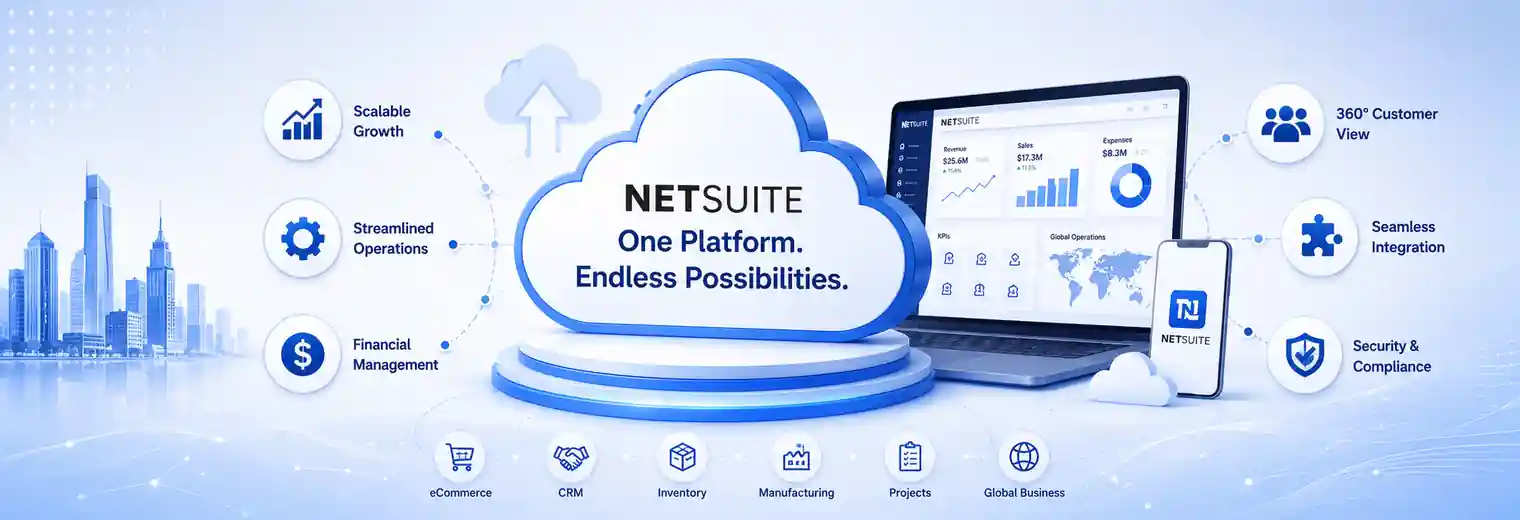
As the Software as a Service (SaaS) industry continues to grow and evolve, companies within this sector face unique challenges and opportunities. SaaS providers must navigate complexities such as subscription billing, customer management, and rapid scalability. NetSuite, a leading cloud-based Enterprise Resource Planning (ERP) solution, has become a vital tool for SaaS businesses, offering comprehensive solutions to address these challenges. This article explores the role of NetSuite in the SaaS industry, highlighting how it supports SaaS companies in managing operations, optimizing processes, and driving growth.
The Role of NetSuite in the SaaS Industry: All You Need to Know
Last Updated • 25 May 2026
C
AuthorChloe Gallagher
1. Comprehensive Financial Management
NetSuite provides robust financial management tools that are crucial for SaaS businesses, which often operate with subscription-based revenue models. The platform’s financial management capabilities include accounting, revenue recognition, and financial reporting.
How It Supports SaaS Businesses:
- 1Subscription Billing:Subscription Billing: NetSuite automates subscription billing processes, handling recurring charges, proration, and upgrades or downgrades with ease. This reduces administrative overhead and minimizes billing errors
- 2Revenue Recognition: NetSuite’s revenue recognition features help SaaS companies comply with accounting standards such as ASC 606, ensuring accurate and timely recognition of revenue from subscriptions and services.
- 3Financial Reporting: The platform provides real-time financial reporting and analytics, giving SaaS businesses insights into revenue performance, profitability, and financial health
2. Customer Relationship Management (CRM)
Effective customer management is critical for SaaS companies, which rely heavily on customer retention and relationship building. NetSuite’s CRM capabilities integrate seamlessly with its ERP system, providing a unified view of customer interactions and data
How It Supports SaaS Businesses
- 1360-Degree Customer View:: NetSuite’s CRM offers a comprehensive view of customer interactions, including sales, support, and service history. This helps SaaS companies build stronger relationships and deliver personalized experiences.
- 2Lead and Opportunity Management: The CRM module helps track leads, manage sales pipelines, and forecast revenue, supporting SaaS businesses in driving growth and closing deals.
- 3Customer Support: Integrated support features enable efficient handling of customer inquiries, issues, and service requests, enhancing customer satisfaction and retention
3. Scalability and Flexibility
SaaS businesses often experience rapid growth and changing needs. NetSuite’s cloud-based ERP solution offers scalability and flexibility to support this dynamic environment.
How It Supports SaaS Businesses:
- 1Scalable Infrastructure: : NetSuite’s cloud infrastructure allows SaaS companies to scale their operations seamlessly as they grow. This includes expanding user access, increasing storage capacity, and integrating additional functionalities
- 2Customizable Solutions: NetSuite offers customization options to tailor the platform to specific business needs. SaaS companies can configure workflows, dashboards, and reports to align with their unique processes and requirements
4. Operational Efficiency
Efficient operations are essential for SaaS companies to manage costs and deliver value to customers. NetSuite’s ERP system streamlines various operational processes, including order management, inventory management, and project management
How It Supports SaaS Businesses:
- 1Order Management: NetSuite automates order processing, from initial order entry to fulfilment and invoicing, improving accuracy and reducing manual effort.
- 2Inventory Management: For SaaS businesses that offer hardware or physical products alongside their software, NetSuite’s inventory management features help track stock levels, manage procurement, and optimize inventory turnover.
- 3Project Management: NetSuite’s project management tools support planning, execution, and monitoring of projects, helping SaaS companies manage development cycles, client implementations, and internal initiatives.
5. Data Integration and Analytics
Data integration and analytics are critical for making informed business decisions. NetSuite provides powerful data integration and analytics capabilities that enable SaaS companies to consolidate data from various sources and derive actionable insights.
How It Supports SaaS Businesses:
- 1Unified Data Platform: NetSuite integrates data from financials, CRM, and other business functions into a single platform, providing a comprehensive view of business performance.
- 2Advanced Analytics: The platform offers advanced analytics and reporting tools that help SaaS companies analyse trends, track key performance indicators (KPIs), and make data-driven decisions.
6. Compliance and Security
Compliance with regulatory requirements and ensuring data security are top priorities for SaaS companies. NetSuite offers features that support regulatory compliance and data protection.
How It Supports SaaS Businesses:
- 1Compliance Management: NetSuite helps SaaS companies adhere to financial regulations, data protection laws, and industry standards through automated compliance processes and reporting.
- 2Data Security: The platform provides robust security features, including encryption, access controls, and regular audits, to protect sensitive data and maintain data integrity.
In addition to strong compliance and security measures, SaaS companies must also prioritize reliable data protection strategies. Implementing a robust NetSuite data backup plan ensures that critical business information remains safe, recoverable, and accessible in the event of system failures or accidental data loss. By maintaining secure, automated backups, organizations can minimize downtime, preserve data integrity, and maintain business continuity across their cloud environments.
7. Customer Success and Service
Customer success is a key focus for SaaS businesses, and NetSuite’s tools support this goal by providing insights into customer usage, performance, and satisfaction.
How It Supports SaaS Businesses:
- 1Customer Insights: NetSuite’s analytics tools help track customer usage patterns, identify potential issues, and measure satisfaction, enabling SaaS companies to proactively address customer needs.
- 2Service Management: The platform supports efficient management of service delivery, including support tickets, service level agreements (SLAs), and customer feedback, ensuring high-quality service and support.
NetSuite plays a pivotal role in the SaaS industry by providing a comprehensive ERP solution that addresses the unique needs of SaaS businesses. From financial management and customer relationship management to scalability, operational efficiency, and data analytics, NetSuite offers a range of tools to support SaaS companies in navigating their complex and rapidly changing environment. By leveraging NetSuite’s capabilities, SaaS businesses can enhance operational efficiency, drive growth, and deliver exceptional value to their customers. As the SaaS industry continues to evolve, NetSuite remains a valuable partner in helping companies achieve their strategic objectives and succeed in a competitive landscape.
Loading...