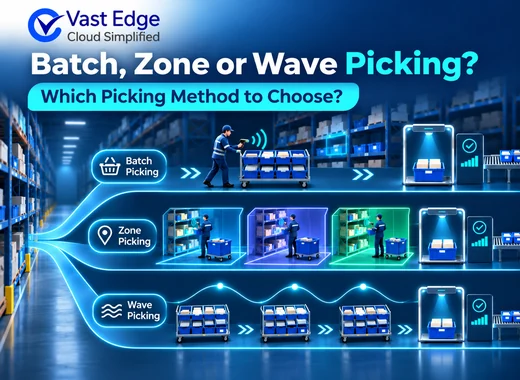
Choose batch, zone or wave picking from the order profile and operating constraints, not from a generic best-practice claim. Batch picking reduces repeated travel for similar orders, zone picking assigns work by area, and wave picking releases coordinated groups of work. Pilot each candidate and compare errors, travel, handoffs, congestion and completion time.
How Do You Choose Batch, Zone or Wave Picking?
PublishedNov 24, 2026
C
AuthorChloe Gallagher
What information should you collect before choosing a method?
What information should you collect before choosing a method? Begin with order lines, units per line, SKU velocity, item size, storage layout, service cutoffs, labor and current exception causes. Define the business event, the authoritative record and the person responsible for the outcome. A feature label is not an acceptance standard. The procedure must explain what is expected, what evidence proves completion and which condition requires escalation.
Create a normal path and an exception path for order lines, units per line, SKU velocity, item size, storage layout, service cutoffs, labor and current exception causes. Use unique identifiers, timestamps and reason codes so another reviewer can reconstruct the action. Where a decision can change inventory, access or recoverable data, require an approved owner and preserve the before-and-after state.
Test order lines, units per line, SKU velocity, item size, storage layout, service cutoffs, labor and current exception causes with representative data and least-privilege roles. Include a partial transaction, invalid input, duplicate attempt and delayed dependency. Compare the final business result with operational logs, then classify each gap as data, configuration, process, integration, permission or product scope.
Add order lines, units per line, SKU velocity, item size, storage layout, service cutoffs, labor and current exception causes to the operating review. Track recurring failures, the oldest unresolved exception and corrective actions. A successful test should be repeatable by the assigned team, not dependent on an undocumented workaround or one administrator’s memory.
| Method | Strong fit | Main control |
|---|---|---|
| Batch | Many similar small orders | Separate orders and scan every allocation |
| Zone | Distinct warehouse areas | Track handoffs and balance workload |
| Wave | Time-based coordinated release | Confirm inventory and capacity before release |
When does batch picking fit the order profile?
When does batch picking fit the order profile? Begin with many small orders sharing common SKUs, cart capacity, order separation, scan confirmation and sort accuracy. Define the business event, the authoritative record and the person responsible for the outcome. A feature label is not an acceptance standard. The procedure must explain what is expected, what evidence proves completion and which condition requires escalation.
Create a normal path and an exception path for many small orders sharing common SKUs, cart capacity, order separation, scan confirmation and sort accuracy. Use unique identifiers, timestamps and reason codes so another reviewer can reconstruct the action. Where a decision can change inventory, access or recoverable data, require an approved owner and preserve the before-and-after state.
Test many small orders sharing common SKUs, cart capacity, order separation, scan confirmation and sort accuracy with representative data and least-privilege roles. Include a partial transaction, invalid input, duplicate attempt and delayed dependency. Compare the final business result with operational logs, then classify each gap as data, configuration, process, integration, permission or product scope.
Add many small orders sharing common SKUs, cart capacity, order separation, scan confirmation and sort accuracy to the operating review. Track recurring failures, the oldest unresolved exception and corrective actions. A successful test should be repeatable by the assigned team, not dependent on an undocumented workaround or one administrator’s memory.
When does zone picking fit the warehouse layout?
When does zone picking fit the warehouse layout? Begin with stable product zones, specialized handling, balanced workload, inter-zone handoffs, consolidation and ownership. Define the business event, the authoritative record and the person responsible for the outcome. A feature label is not an acceptance standard. The procedure must explain what is expected, what evidence proves completion and which condition requires escalation.
Create a normal path and an exception path for stable product zones, specialized handling, balanced workload, inter-zone handoffs, consolidation and ownership. Use unique identifiers, timestamps and reason codes so another reviewer can reconstruct the action. Where a decision can change inventory, access or recoverable data, require an approved owner and preserve the before-and-after state.
Test stable product zones, specialized handling, balanced workload, inter-zone handoffs, consolidation and ownership with representative data and least-privilege roles. Include a partial transaction, invalid input, duplicate attempt and delayed dependency. Compare the final business result with operational logs, then classify each gap as data, configuration, process, integration, permission or product scope.
Add stable product zones, specialized handling, balanced workload, inter-zone handoffs, consolidation and ownership to the operating review. Track recurring failures, the oldest unresolved exception and corrective actions. A successful test should be repeatable by the assigned team, not dependent on an undocumented workaround or one administrator’s memory.
When does wave picking fit fulfillment planning?
When does wave picking fit fulfillment planning? Begin with carrier cutoffs, replenishment readiness, labor capacity, order priorities, release timing and downstream packing constraints. Define the business event, the authoritative record and the person responsible for the outcome. A feature label is not an acceptance standard. The procedure must explain what is expected, what evidence proves completion and which condition requires escalation.
Create a normal path and an exception path for carrier cutoffs, replenishment readiness, labor capacity, order priorities, release timing and downstream packing constraints. Use unique identifiers, timestamps and reason codes so another reviewer can reconstruct the action. Where a decision can change inventory, access or recoverable data, require an approved owner and preserve the before-and-after state.
Test carrier cutoffs, replenishment readiness, labor capacity, order priorities, release timing and downstream packing constraints with representative data and least-privilege roles. Include a partial transaction, invalid input, duplicate attempt and delayed dependency. Compare the final business result with operational logs, then classify each gap as data, configuration, process, integration, permission or product scope.
Add carrier cutoffs, replenishment readiness, labor capacity, order priorities, release timing and downstream packing constraints to the operating review. Track recurring failures, the oldest unresolved exception and corrective actions. A successful test should be repeatable by the assigned team, not dependent on an undocumented workaround or one administrator’s memory.
How should you measure picking errors and delays?
How should you measure picking errors and delays? Begin with wrong item, wrong quantity, missed line, damage, short pick, travel distance, touches, queue time and rework. Define the business event, the authoritative record and the person responsible for the outcome. A feature label is not an acceptance standard. The procedure must explain what is expected, what evidence proves completion and which condition requires escalation.
Create a normal path and an exception path for wrong item, wrong quantity, missed line, damage, short pick, travel distance, touches, queue time and rework. Use unique identifiers, timestamps and reason codes so another reviewer can reconstruct the action. Where a decision can change inventory, access or recoverable data, require an approved owner and preserve the before-and-after state.
Test wrong item, wrong quantity, missed line, damage, short pick, travel distance, touches, queue time and rework with representative data and least-privilege roles. Include a partial transaction, invalid input, duplicate attempt and delayed dependency. Compare the final business result with operational logs, then classify each gap as data, configuration, process, integration, permission or product scope.
Add wrong item, wrong quantity, missed line, damage, short pick, travel distance, touches, queue time and rework to the operating review. Track recurring failures, the oldest unresolved exception and corrective actions. A successful test should be repeatable by the assigned team, not dependent on an undocumented workaround or one administrator’s memory.
For related context, review the open-source WMS guide, warehouse management trends guide and ACT Enviro WMS case study. These resources provide context and do not replace the topic-specific acceptance checks above.
How do you run a fair picking-method pilot?
How do you run a fair picking-method pilot? Begin with representative orders, matched staffing, identical devices, controlled time windows, exception scenarios and baseline comparison. Define the business event, the authoritative record and the person responsible for the outcome. A feature label is not an acceptance standard. The procedure must explain what is expected, what evidence proves completion and which condition requires escalation.
Create a normal path and an exception path for representative orders, matched staffing, identical devices, controlled time windows, exception scenarios and baseline comparison. Use unique identifiers, timestamps and reason codes so another reviewer can reconstruct the action. Where a decision can change inventory, access or recoverable data, require an approved owner and preserve the before-and-after state.
Test representative orders, matched staffing, identical devices, controlled time windows, exception scenarios and baseline comparison with representative data and least-privilege roles. Include a partial transaction, invalid input, duplicate attempt and delayed dependency. Compare the final business result with operational logs, then classify each gap as data, configuration, process, integration, permission or product scope.
Add representative orders, matched staffing, identical devices, controlled time windows, exception scenarios and baseline comparison to the operating review. Track recurring failures, the oldest unresolved exception and corrective actions. A successful test should be repeatable by the assigned team, not dependent on an undocumented workaround or one administrator’s memory.
Which controls belong in the final operating procedure?
Which controls belong in the final operating procedure? Begin with release rules, scanning, replenishment, short-pick handling, handoff evidence, supervisor override and daily review. Define the business event, the authoritative record and the person responsible for the outcome. A feature label is not an acceptance standard. The procedure must explain what is expected, what evidence proves completion and which condition requires escalation.
Create a normal path and an exception path for release rules, scanning, replenishment, short-pick handling, handoff evidence, supervisor override and daily review. Use unique identifiers, timestamps and reason codes so another reviewer can reconstruct the action. Where a decision can change inventory, access or recoverable data, require an approved owner and preserve the before-and-after state.
Test release rules, scanning, replenishment, short-pick handling, handoff evidence, supervisor override and daily review with representative data and least-privilege roles. Include a partial transaction, invalid input, duplicate attempt and delayed dependency. Compare the final business result with operational logs, then classify each gap as data, configuration, process, integration, permission or product scope.
Add release rules, scanning, replenishment, short-pick handling, handoff evidence, supervisor override and daily review to the operating review. Track recurring failures, the oldest unresolved exception and corrective actions. A successful test should be repeatable by the assigned team, not dependent on an undocumented workaround or one administrator’s memory.
Key Takeaways
- 01Start with a defined business outcome, authoritative record and accountable owner.
- 02Test both normal activity and difficult exceptions with representative data.
- 03Use measurable acceptance evidence and business-owner validation before closing the work.
- 04Record product limits and observed results without converting them into universal guarantees.
Explore the Relevant Vast Edge Solution
If your organization needs support applying these controls, review Vast Edge WMS. Use a discovery session to confirm supported scope, exclusions, administration and acceptance evidence before discussing implementation or service options.
Loading...