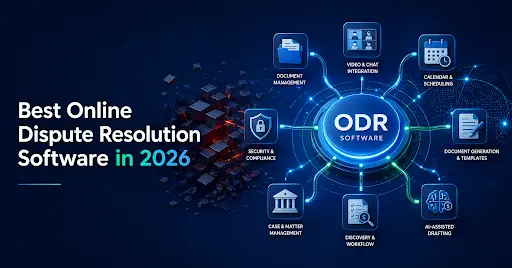
The term "online dispute resolution" was once shorthand for basic mediation portals. In 2026, ODR software in the context of complex litigation means something significantly more comprehensive.
At its core, a capable platform needs to handle several interconnected functions:
Case and matter management
Organizing all activity, communications, documents, deadlines, and parties around individual legal matters with full audit trails.
Document management system (DMS) integration
A central repository for all case documents with version control, access permissions, and search functionality that spans the entire matter lifecycle. This is especially important for firms evaluating a scalable legal document management system.
Discovery system
Structured workflows for managing discovery requests, production tracking, privilege logging, and deadline monitoring between plaintiffs and defendants.
Document generation and template management
The ability to create, store, and deploy standardized legal documents and correspondence templates, reducing drafting time and ensuring consistency across matters.
AI-assisted document drafting
Increasingly standard in 2026, AI tools that generate first-draft documents, extract relevant clauses, summarize discovery materials, or flag inconsistencies in large document sets. Many firms are now evaluating AI-powered legal workflow automation to streamline repetitive legal operations.
When handled separately, these functions recreate the fragmentation problem ODR software is supposed to eliminate. The differentiator in 2026 is integration depth.